
The role of prefabricated steel building in disaster resistance
Today, with the intensification of climate change and frequent occurrence of extreme disasters, users have put forward higher requirements for the disaster resilience of industrial and civil buildings. Traditional architecture often suffers heavy losses in disasters such as earthquakes, hurricanes, and floods due to its long construction period, high material brittleness, and difficult repair. Prefabricated steel building are becoming a new benchmark for global disaster resistant infrastructure due to their modular production, rapid assembly, and strong materials. This article will start from disaster scenarios, analyze their core advantages, and combine with the technical practice of Yirong Group to provide reliable choices for global users.
1. Four major disaster resistance advantages of prefabricated steel building
The disaster resistance capability of prefabricated steel buildings comes from the full chain design logic of their materials, structures, and construction, which can respond to major types of disasters worldwide in a targeted manner.
Earthquake resistance: In earthquakes, the main cause of building damage is collapse due to resonance between structural stiffness and seismic wave frequency. Prefabricated steel building adopt light steel structures and flexible node designs. The steel components themselves have 20 times the ductility of concrete and can absorb seismic energy. The nodes are connected by bolts or rivets, allowing the structure to deform slightly during vibration, with a displacement angle of up to 1/50 arc, avoiding fracture. In the 2022 Chile earthquake with a magnitude of 7.7, the metal factory building designed by Yirong Group only had partial color plate detachment and zero damage to the main structure, while the collapse rate of the surrounding concrete warehouse reached 40%.
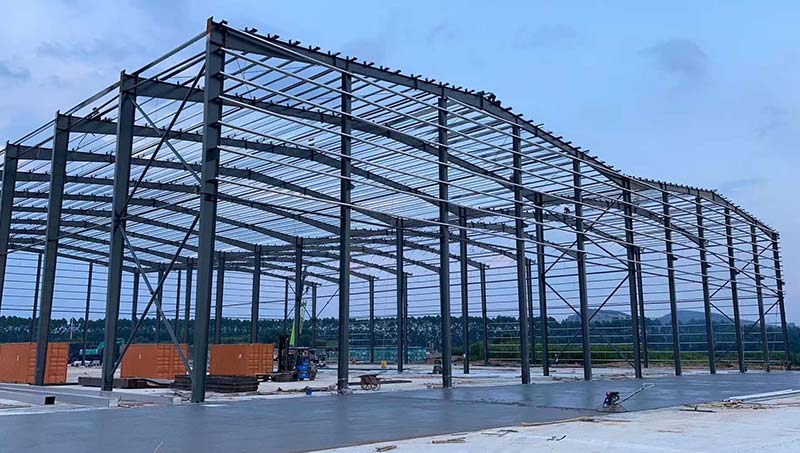
Hurricane resistance: Strong winds (such as hurricanes and typhoons) mainly cause damage to buildings, such as roof overturning and structural instability. Prefabricated steel buildings enhance wind resistance through three points:
① The main frame adopts hot-dip galvanized steel truss (galvanized layer ≥ 85 μ m), with a wind resistance of UL 580 Class 150, which can withstand a wind pressure of 150psf, equivalent to a level 17 typhoon.
② The roof adopts a bite type and screw double fixing design to prevent the color steel plate from being lifted by the wind.
③ The overall stiffness is optimized through computer simulation to ensure no structural displacement at a wind speed of 50m/s. During Typhoon Dujuan in the Philippines in 2023, the steel structure factory building constructed by Yirong Group for the local food factory withstood the test of 17 level gusts, becoming one of the few intact industrial facilities in the region.
Flood resistance: Soaking in floodwaters can lead to the decay of building materials and structural instability. The core material of prefabricated steel building is naturally corrosion-resistant. The hot-dip galvanized layer can isolate 99% of moisture and oxygen. Weathering steel (including copper and chromium alloys) forms a dense oxide film in humid environments, and its corrosion resistance is 8-10 times that of ordinary steel. Yirong Group has also launched a fully sealed node design, which blocks flood infiltration through rubber gaskets and waterproof rubber strips. Its Johor state flood prone project in Malaysia (flooded to a depth of 1.2 meters in 2022) has been tested and found to have only slight surface oxidation of steel components, which can be directly reused after repair.
Fire resistance: Industrial building fires (such as chemical leaks and electrical short circuits) often result in increased losses due to structural failure. Prefabricated steel building respond with dual protection:
① Apply fire-resistant coating (thickness 5-30mm, fire resistance limit 1-3 hours) on the surface of the components to delay the heating of the steel. The strength of steel decreases by 50% at 500 ℃, and fireproof coating can delay its critical temperature to above 600 ℃.
② Adopting modular partition design, damaged modules can be quickly isolated in case of fire to prevent the spread of fire. The metal structure factory customized by Yirong Group for Middle Eastern petrochemical enterprises has successfully controlled a single area fire within 2 hours without affecting other production modules.
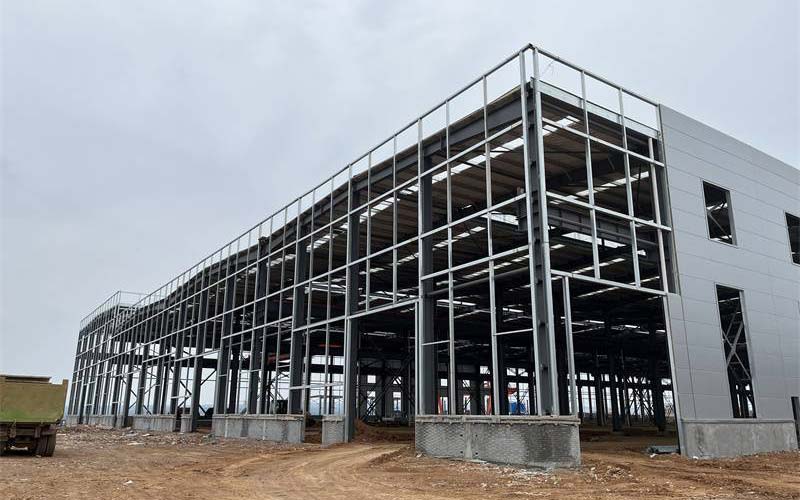
2. Advantages of Yirong Group
Against the backdrop of a surge in global demand for disaster resistant infrastructure, Yirong Group has become the preferred partner in the international market with its three core capabilities of technical certification, case verification, and localized services.
Technical certification covers the world: Yirong Group has obtained 12 international certifications, including AISC in the United States, EN in Europe, and building codes in Southeast Asian countries (such as PS standards in the Philippines and SNI in Indonesia). Its disaster resistant design capabilities have been recommended by FEMA and the United Nations Disaster Reduction Programme (UNDP).
Practical case verification of resilience: The group’s participation in projects such as post earthquake reconstruction in Chile (2022), typhoon emergency resettlement housing in the Philippines (2023), and industrial plants in flood prone areas in Malaysia (2022) have all achieved the goal of rapid post disaster recovery. Among them, the Chilean project has been listed as a demonstration project for disaster resistant buildings by the local government.
Quick response: Yirong Group provides customized design and post disaster emergency support services throughout the entire process. For example, in response to the high temperature and humidity environment in Southeast Asia, the R&D team optimized the hot-dip galvanizing process (increasing the thickness of the zinc layer to 120 μ m). For hurricane prone areas in North America, adjustable roof profiles have been developed that can be dynamically reinforced according to wind speed.
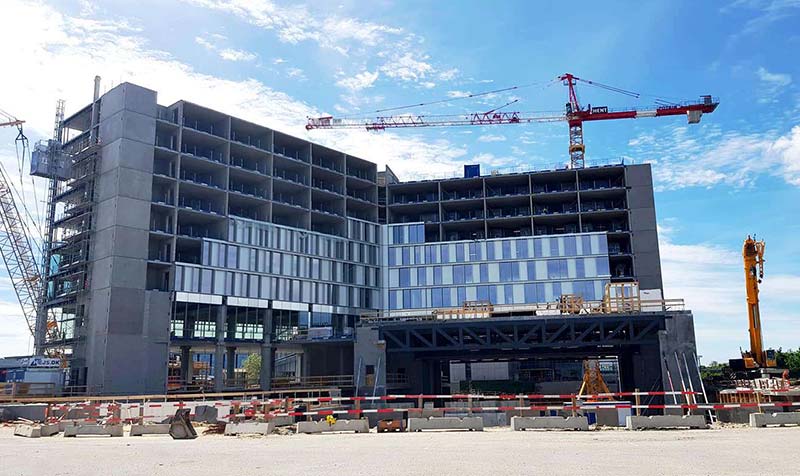
Choosing prefabricated steel building means choosing a resilient future
Against the backdrop of continuously rising global disaster risks, prefabricated steel buildings have shifted from optional options to mandatory configurations. Yirong Group with its technological innovation, global certification, and practical experience, can not only provide customers with disaster resistant buildings that meet international standards, but also respond quickly to emergency needs after disasters. For users, choosing Yirong Steel Structure means choosing a resilient fortress that can withstand earthquakes, hurricanes, floods, and fires, and laying a solid foundation for future sustainable development.