Design Specifications
Design codes for steel structures serve as the technical basis for ensuring structural safety, functionality, and reliability throughout their entire lifecycle. Globally, major code systems have emerged, primarily represented by China's GB 50017, the US ANSI/AISC 360, and Europe's EN 1993. The choice of code system directly determines load combinations, resistance values, and structural measures. Multinational projects must explicitly adhere to the current codes of the project's host country as the design basis.
The role of design codes extends beyond component verification; it permeates the entire process, including structural selection, material selection, load analysis, limit state verification, joint construction, fabrication, transportation, installation, and corrosion and fire protection.
- Clearly Define Applicable Standard Systems and Versions
- Regularity and Capacity Design Method in Seismic Design
- Stability Verification Must Not Omit Second-Order Effects
- Node Design Should Be Consistent with Calculation Assumptions
- Corrosion and Fire Protection Designs Must Be Defined Simultaneously
- Construction Phase and Special Working Conditions Should Be Included in Verification Calculations
Steel Building Structure Types
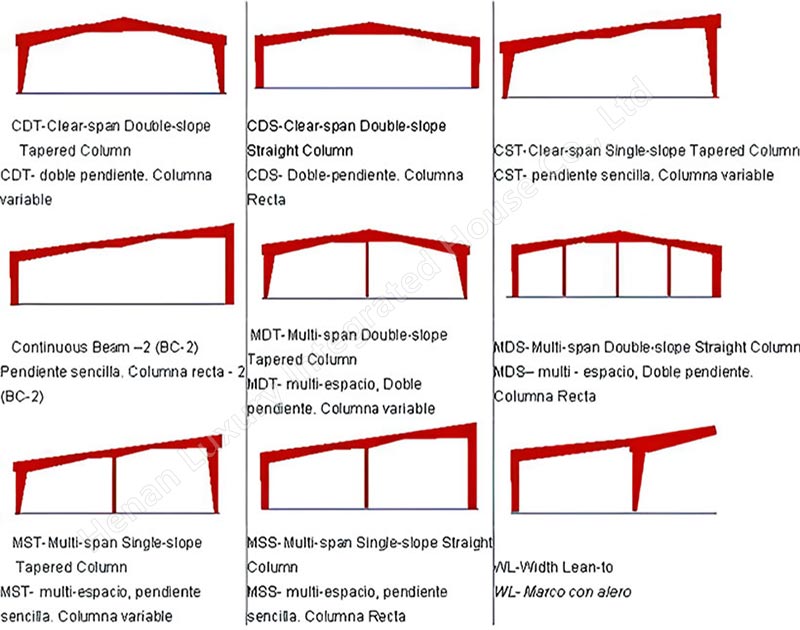
Steel Building Structure Design
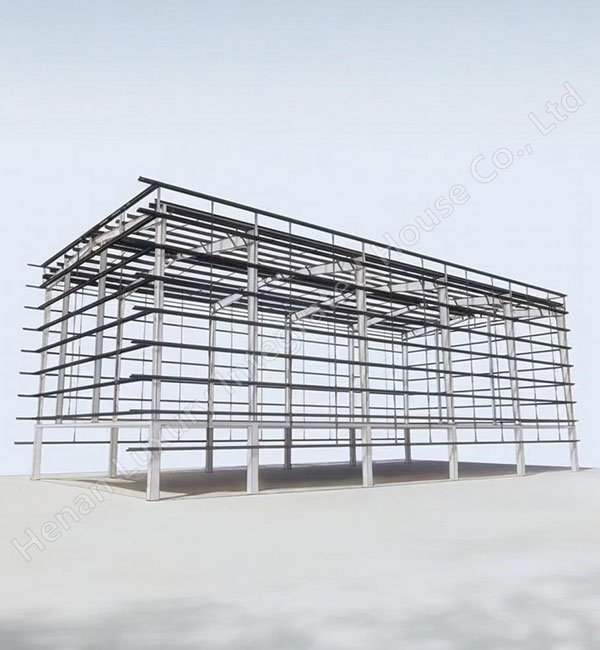
The structural design of steel structure buildings is based on the building's function, span, column spacing, eaves height, crane requirements, load conditions, local regulations, and climate. This includes structural selection, calculation model establishment, load combination, strength and stability verification, and joint construction design. It also considers the enclosure system, corrosion and fire protection, fabrication, transportation, and on-site installation requirements to ensure structural safety, reliable load transfer, economic efficiency, and ease of assembly. Different roof and span types are suitable for different production processes and site conditions. Common structural forms include:
- Single-slope roof structure
- Double-slope single-span structure
- Double-slope multi-span structure
- High-low span structure
- Multi-ridge multi-span structure
- Four-slope or multi-slope roof structure
- Flat roof structure
- Arched or irregularly shaped roof structures
Steel structure Production Process
The steel structure production and processing process begins with the inspection of raw materials upon arrival at the factory. This involves CNC cutting, assembly, welding, straightening, drilling, shot blasting for rust removal, anti-corrosion coating, and fireproofing. After passing dimensional verification, non-destructive testing of welds, and final product inspection, the components are classified, packaged, and shipped according to their serial numbers. The entire process is subject to process control and quality traceability to ensure consistent component precision and quality.
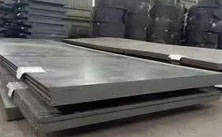
Material Preparation
Verify steel specifications, material certificates, and quantities according to project drawings and material requirements, and complete incoming inspection and material preparation.
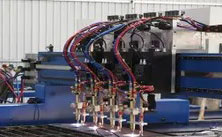
CNC Cutting
Use CNC cutting equipment to accurately cut materials according to detailed drawings, ensuring component dimensions and cut quality.
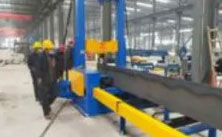
Assembly
Use CNC cutting equipment to accurately cut materials according to detailed drawings, ensuring component dimensions and cut quality.
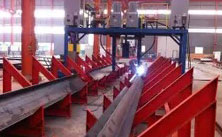
Submerged Arc Welding
Automated submerged arc welding equipment is used for continuous welding of major seams, ensuring penetration depth, weld quality, and production efficiency.
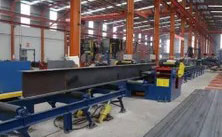
Straightening
Welded components are straightened to eliminate welding deformation and restore straightness and dimensional accuracy.
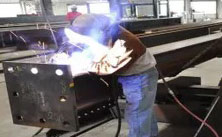
Manual Welding
Nodes, accessories, and localized welds that are difficult to cover with automated welding are manually welded to ensure complete connections.
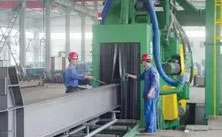
Rust Removal
Sandblasting removes rust, scale, and contaminants from the component surface to achieve the specified rust removal level, preparing for painting.
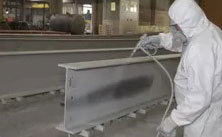
Painting
Primer, intermediate coat, and topcoat are applied according to the corrosion protection design requirements to form a uniform coating, protecting the components and extending their service life.
Packaging and Shipping
In the packaging and shipping of steel structure projects, Yirong uses steel packing racks for component assembly and securing, facilitating hoisting, loading, unloading, and transportation. This effectively improves loading and unloading efficiency and saves operating time. The stable packing rack structure neatly secures components, reducing the risk of damage, scattering, and deformation during transportation and ensuring cargo safety. Meanwhile, the packing rack is made of steel frame and can be recycled and reused after the project is completed, taking into account transportation safety, turnover efficiency and environmental protection and cost reduction.